
Participation of Rabu Biru Foundation in the Synchronization of National and Regional Health Development Plans (RPJMN–RPJMD)
Key Findings
Misalignment between national (RPJMN) and regional (RPJMD) health indicators risks leaving vulnerable communities behind.
Persistent data gaps at the district level limit transparency, accountability, and equitable resource allocation.
A gap remains between national commitments to preventive care and local realities that still prioritize costly curative services.
Uneven local planning capacity creates structural inequities across regions, particularly in eastern Indonesia.
Stronger multi-stakeholder coordination—across government, civil society, and development partners—is essential to drive meaningful change.
Overview of the Activity
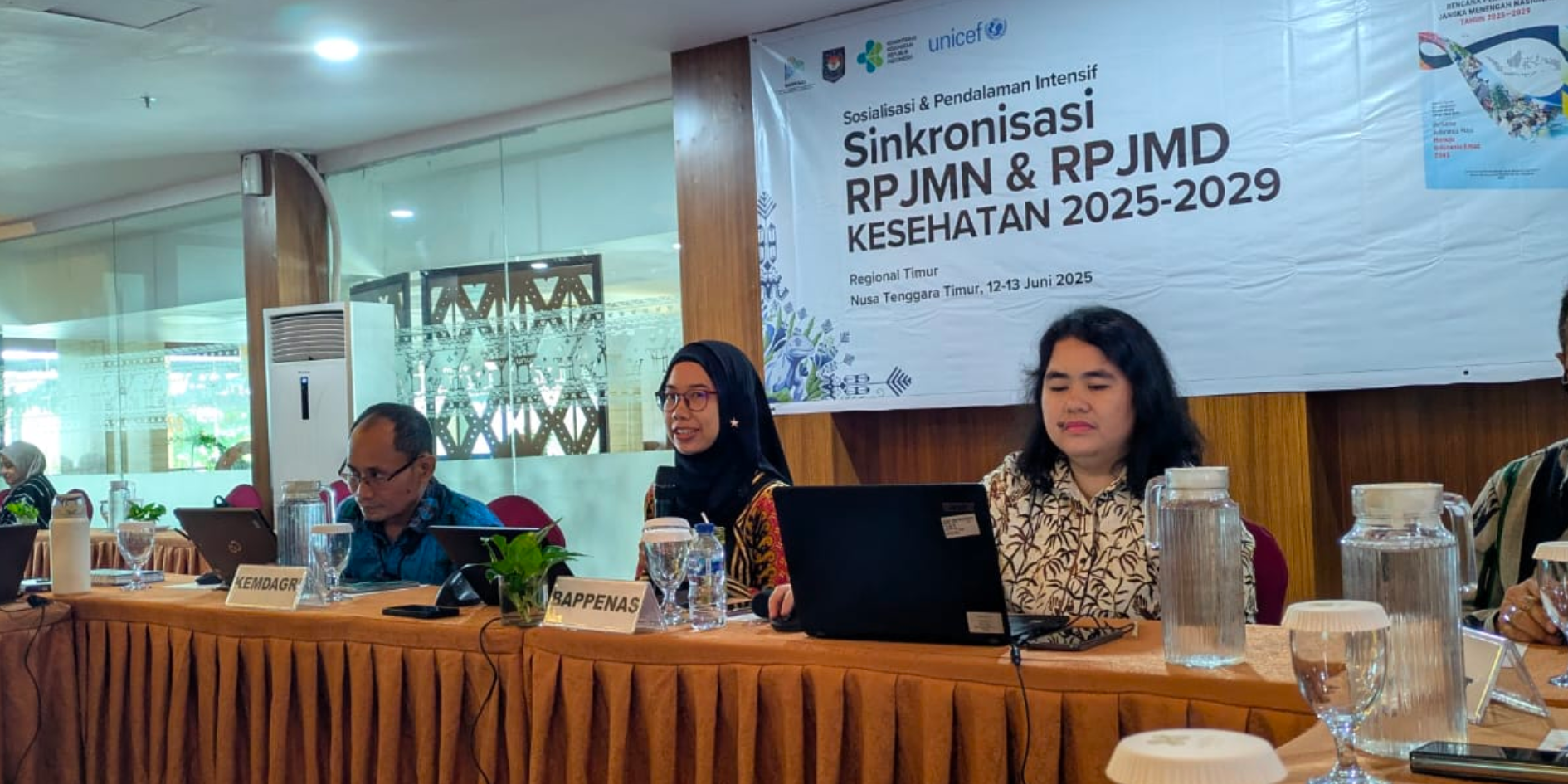
In Kupang, East Nusa Tenggara, Rabu Biru Foundation joined BAPPENAS as an advisor in a critical dialogue on aligning Indonesia’s national and regional health plans. Beyond technical discussions, the workshop highlighted a deeper issue: the success of Indonesia’s health agenda depends on whether policies in Jakarta truly translate into better services for mothers, children, and families in remote districts. For Rabu Biru, this engagement was not just about planning—it was about ensuring that every community has a fair chance to be healthy.
As regional officials shared their experiences, it became clear that many districts are working hard under significant constraints—limited data, tight budgets, and uneven capacity. These are not failures of local governments, but signals of a system that needs stronger support and partnership. Rabu Biru advocated for a more people-centered approach to planning, where data, financing, and indicators are designed with equity in mind, and where civil society and communities have a seat at the table.
The Kupang convening reaffirmed that synchronizing RPJMN and RPJMD is both a technical and moral imperative. Rabu Biru Foundation remains committed to standing alongside government, communities, and donors to push for better alignment, smarter investment, and more accountable governance. Together, we can transform plans into impact—so that every child, every family, and every community benefits from Indonesia’s vision for a healthier future.
